Polizeiruf 110 Heißkalte Liebe: Unveiling the Ice-Cold Psychopath of Halle's Art World
For aficionados of German crime drama, certain episodes stand out not just for their gripping narratives but for their profound psychological depth and unforgettable characters. Among these classics is
Polizeiruf 110 Heisskalte Liebe, an early but pivotal case for the beloved Halle detective duo, Herbert Schmücke (Jaecki Schwarz) and Herbert Schneider (Wolfgang Winkler). This episode, which transports viewers back to an era when the cult detectives were just finding their rhythm, delves into a world of artistic glamour that conceals a dark underbelly of jealousy, greed, and terrifying psychological manipulation. Far from a typical small-town crime, "Heißkalte Liebe" (meaning "Hot-Cold Love") explores how a seemingly cultivated surface can crumble under the weight of human failings, ultimately unmasking an
eiskalter Psychopath who sends shivers down the spine.
A Glimpse into Halle's Tarnished Art Scene: The Case Begins
The narrative of this classic
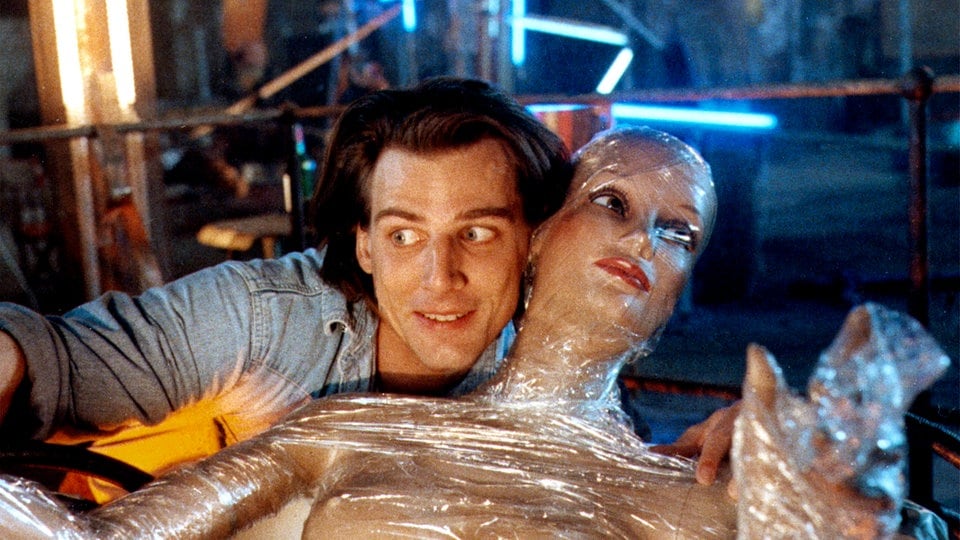
Polizeiruf 110 Heisskalte Liebe episode plunges viewers directly into a milieu rarely explored in German television crime at the time: the glittering, yet morally compromised, art scene of Halle. This setting immediately sets "Heißkalte Liebe" apart, creating a rich backdrop for a complex murder mystery. The initial victim is Verena Weißenborn, a vibrant young art student, portrayed with remarkable intensity by a then 28-year-old Mariella Ahrens. Although her screen time is brief, her portrayal of Verena laid the crucial groundwork for Ahrens's subsequent rise to prominence, becoming a memorable launchpad for her career. Indeed, her performance in
Heißkalte Liebe: Mariella Ahrens' Breakthrough in Halle's Twisted Art World is often cited as a career-defining moment.
The discovery of Verena's body is as brutal as it is perplexing: found dead in a bathtub, the cause initially points to a tragic accident involving a sunlamp. However, the subsequent autopsy conducted by Dr. Klaus Piepe (Klaus-Jürgen Steinmann) quickly reveals a chilling twist – Verena was three months pregnant. This revelation immediately intensifies the investigation, shifting the focus from accidental death to a calculated murder with potentially profound motives linked to the unborn child's father.
With this new information, the detectives, Schmücke and Schneider, are led to Professor Paulus (Peter Gavajda). Known for his notorious affairs with students, Professor Paulus quickly emerges as a prime suspect. The inclusion of an academic figure as a potential murderer was, and remains, a distinctive feature of this particular
Polizeiruf 110 Heisskalte Liebe installment, elevating it beyond many other episodes in the series. The dynamic between Schmücke and Schneider truly begins to shine here: Schmücke, ever the empathetic and cautious investigator, delves into the psychological intricacies and nuanced backgrounds, while Schneider adopts a more direct, pragmatic, and openly suspicious approach, particularly towards the academic elite. Their contrasting yet complementary styles become a hallmark of their iconic partnership. This juxtaposition of the sophisticated art world and raw human emotions underpins the entire mystery, highlighting how superficial beauty can mask deep-seated depravity.
Webs of Deceit: Shifting Suspicions and Tragic Turns
As the investigation into Verena Weißenborn's murder deepens, the media quickly latches onto the unfolding scandal. Fueled by anonymous tips to an intrepid journalist (Tatjana Blacher), the press sensationalizes Professor Paulus's involvement, painting him as a predator taking advantage of his students. This media frenzy not only adds a layer of public pressure to the case but also complicates the detectives' work, as public opinion begins to sway towards a predetermined conclusion.
However, Schmücke and Schneider, resilient in their pursuit of truth, cast their net wider. Other individuals soon fall under suspicion, each with plausible motives for either harming Verena or implicating the professor. Sabrina Pohl (Patricia Schäfer), a fellow student, harbored deep-seated jealousy towards Verena. Meanwhile, Verena's father, Peter Weißenborn (Klaus-Peter Thiele), consumed by grief and rage, also becomes a person of interest. His desperation culminates in a tragic escalation when he is caught setting fire to Professor Paulus's car. Arrested and facing overwhelming suspicion, Peter Weißenborn sees no escape from his predicament. In a devastating turn, he hangs himself in his cell, unable to bear the weight of the accusations.
For many, this suicide would be considered an implicit confession, bringing a swift if tragic end to the investigation. But Schmücke, with his keen psychological insight, refuses to be blinded by such a convenient conclusion. His intuition tells him that there’s more to the story, that the real killer is still at large, lurking in the shadows. This unwavering commitment to uncovering the truth, even when faced with seemingly conclusive evidence, is a defining trait of Schmücke’s character and a hallmark of why this
Polizeiruf 110 Heisskalte Liebe episode is so highly regarded. His refusal to accept the easy answer pushes the investigation forward, steering it towards a far more chilling reality and a truly unexpected perpetrator.
Unmasking the Eiskalter Psychopath: Dirk Raabe's Chilling Revelation
Schmücke's tenacity and his unwavering belief that Peter Weißenborn's suicide was not an admission of guilt proved to be the turning point in the
Polizeiruf 110 Heisskalte Liebe case. His relentless pursuit of the truth led him down a path less obvious, deep into the wounded psyche of another individual connected to Verena Weißenborn: a fellow student named Dirk Raabe (René Steinke).
The climax of this episode is a masterclass in tension and psychological suspense. As Schmücke and Schneider confront Dirk Raabe, the young man's seemingly innocuous demeanor slowly peels away, revealing a truly terrifying core. In a high-stakes, gripping finale, Raabe is exposed as the "eiskalter Psychopath" – an ice-cold psychopath who had meticulously orchestrated Verena's murder and manipulated the circumstances to point suspicion elsewhere. His motive, slowly pieced together by the detectives, transcends simple jealousy or rage. Instead, it speaks to a profound psychological imbalance, a calculated cruelty driven by a desperate need for control and a chilling lack of empathy. Raabe's perceived sense of security, his carefully constructed façade, ultimately crumbles under the detectives' scrutiny, exposing his true, malevolent nature.
What makes Dirk Raabe such a memorable villain in
Polizeiruf 110 Heisskalte Liebe is his cold detachment. He is not a killer driven by passion but by a chilling, almost academic, assessment of his targets and the environment. This portrayal taps into a primal fear: the monster hiding in plain sight, the seemingly normal individual capable of profound evil. The episode masterfully builds this character, showing how deep-seated insecurities and a twisted sense of entitlement can fester into murderous intent. It serves as a stark reminder that the most dangerous individuals are often those who blend seamlessly into society, their true nature hidden beneath a veneer of normalcy.
Beyond the Crime: Enduring Impact and Series Legacy
The
Polizeiruf 110 Heisskalte Liebe episode featuring Schmücke and Schneider stands as a testament to the series' enduring quality and its unique approach to crime drama. It's not merely a "whodunit" but a deep dive into the psychological undercurrents that drive human behavior, both criminal and investigative. Its status as one of the classic cases from Halle is well-deserved, demonstrating how a seemingly glamorous setting can harbor the darkest of secrets, and how even in the face of apparent closure, true justice requires relentless dedication and a keen understanding of the human psyche.
It's important to note, for clarity, that while this article focuses on the iconic Schmücke and Schneider episode, the title "Polizeiruf 110: Heißkalte Liebe" has been reused for a separate, more recent installment airing on March 24, 2026. This newer episode, featuring Commissioner Elisabeth "Bessie" Eyckhoff (Verena Altenberger), tackles the difficult and divisive topic of sexualized violence against children, garnering significant discussion for its contemporary themes and departure from the traditional case structure. However, the original "Heißkalte Liebe" remains etched in the memories of fans for its pioneering psychological depth and its unforgettable unmasking of an ice-cold psychopath.
The legacy of "Polizeiruf 110" itself is built on such episodes. Unlike its counterpart "Tatort," "Polizeiruf 110" frequently prioritizes societal issues and psychological aspects of crime, offering narratives that are often more introspective and gritty. This particular
Polizeiruf 110 Heisskalte Liebe episode perfectly exemplifies that tradition, showcasing how the series consistently challenges viewers to look beyond the obvious and confront the complexities of human morality. It's a prime example of German television at its best: thought-provoking, well-acted, and enduringly relevant.
In conclusion, the
Polizeiruf 110 Heisskalte Liebe episode featuring Schmücke and Schneider is more than just a crime story; it's a profound psychological thriller that laid bare the dark secrets beneath a polished facade. From Mariella Ahrens's breakthrough performance to the iconic investigative dynamic of the Halle duo and the chilling revelation of Dirk Raabe as the eiskalter Psychopath, this episode continues to captivate and resonate with audiences, solidifying its place as a cornerstone of the Polizeiruf 110 legacy.